

Emma Marriott On Building A More Accessible Financial System
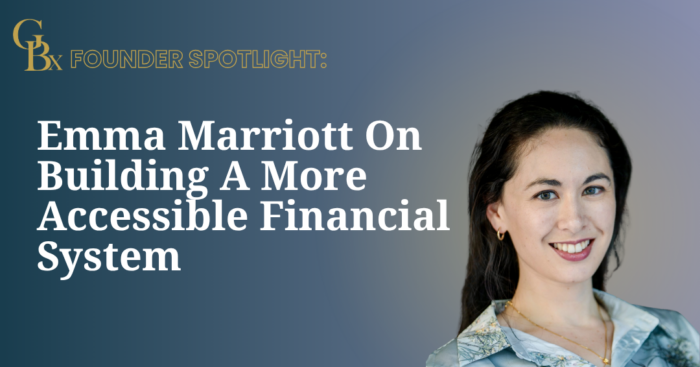
Wealth management has historically been a product for people who already have wealth. Emma Marriott co-founded Atomic Invest to change this. She believes the fastest way to create change is to build the infrastructure that makes it easy for anyone, anywhere, to offer investment products to their customers.
Atomic now operates as a B2B platform – an API layer that lets fintechs, banks, and consumer-facing companies embed investing, cash management, and brokerage services directly into their products.
Before joining the founding team, Emma built her career in machine learning at Google and Waymo. Six years on, Atomic has surpassed $1 billion in assets under management, raised over $55 million in funding, and recently made its first European acquisition, bringing its platform to new markets.
We sat down with Emma Marriott for our GBx Founder Spotlight series to talk about building through Covid, navigating financial regulation and why sustainable growth beats a meteoric rise.
If I weren’t a founder, I would be…
‘Building a side business in investment properties. I love travelling and discovering new locations. I have a few short-term rentals in different places already, and it just makes me happy.’
The one piece of advice I keep coming back to is…
‘Never assume something is impossible. That’s something I learned early as a founder, and you have to maintain that frame of mind if you want to push through.’
One thing about entrepreneurship that people often underestimate is…
‘That it’s a marathon, not a sprint. We’ve been building Atomic for six years now, and I think sustainable long-term growth is something that can easily get overlooked, especially today. However, burning yourself out quickly gets you nowhere. You have to have a long-term view.’ .
One tool I couldn’t imagine living without is…
‘LLMs. It’s funny because my answer would have been completely different just one year ago.’
Take us back to the beginning. How did Atomic start, and what was it like launching during a global pandemic?
‘My co-founder, David Dindi, had taken the original idea behind Atomic through Y Combinator as a solo founder, and the mission was to make wealth management accessible to every single human being.
I wasn’t actively looking for a co-founder role at that point, but I caught up with David, got excited about the vision, and realised that what I was actually missing was ownership. I wanted to push my capabilities, take on more, and explore what I could really build. The business model clicked with me too: we were focusing on the supply chain of wealth management, reducing the cost of offering services that were typically only available to high-net-worth clients. The impact of financial empowerment at the individual and community level felt very real.
As for launching during Covid, the biggest challenges we faced were, unexpectedly, also a real benefit. Starting in a fully remote environment was hard from a leadership perspective. Pre-Covid, so much of culture was built through physical proximity, being in the office with your team, reading how people are feeling day to day. You lose a lot of that signal when everyone is remote. But the upside was that we were much more open to talent outside our immediate local market. Some of our first hires came from countries I’d never even visited, and the talent pool that opened up to us was just remarkable.’
You operate in a heavily regulated space. How did you find navigating that, and what would you say to other founders in similarly regulated industries?
‘If I had known how hard it was before I started, I probably wouldn’t have done it.
It requires a much deeper investment of capital, time, and patience. The regulatory environment can also shift quickly depending on policy, which means you have to be adaptive and you have to stay on top of what’s happening, build your network within the regulatory ecosystem, and keep close to the changes.
What I’d say to founders thinking about going into a regulated space is the moat is real, and it’s durable. The barrier that made entry so painful is the same barrier that keeps others out.’
You’ve raised significant capital through some difficult market conditions. What has your fundraising journey been like?
‘Every stage was completely different, and how we were evaluated changed significantly depending on the investment environment. My honest advice for other founders fundraising is to take advantage of fundraising opportunities when the environment is good, because when winter comes, you need to be ready to hibernate.
In 2021, fundraising was story and vision-based, especially at the stage we were at, and with fintech running hot. The last few years have been much harder. As the company has matured, fundraising has become about discipline and metrics, including the sustainability of the business, and the numbers that justify the investment being made. That shift is ultimately healthy for the industry, but it’s a real adjustment if you built your early fundraising muscle in a different environment.’
You’ve recently announced the acquisition of Groene Hart Financial Diensten as a springboard into Europe. What are the biggest opportunities you see across the pond?
‘Atomic’s vision has always been to make wealth management accessible everywhere, and we meant everywhere literally.
The acquisition was a multi-year process, which tells you something about how early we started thinking about this. Most smaller companies don’t prioritise international expansion that early, but the opportunity in Europe is significant and the regulatory groundwork is substantial.
There’s enormous demand for access to US markets from outside the US, and not many companies are positioned to deliver that. We want to close that gap.’
What’s been the biggest personal highlight of the last six years?
‘It’s got to be crossing $1 billion in AUM, and specifically, how quickly it happened.
It was during the collapse of Silicon Valley Bank. Migration of assets at that scale really only happens under fear or significant disruption, which made this moment uniquely time-sensitive. We had a war room running almost continuously for 48 hours, figuring out how to position ourselves, how to serve our clients, and how to move quickly enough to capture the opportunity. It was an intense period, but when we came through the other side and had surpassed $1 billion AUM, it felt incredible.’
Finally, who in your journey deserves more credit than they’ve received?
‘Everyone in my company deserves enormous credit, but if I’m thinking about people outside that circle, it’s got to be my husband.
He’s been supportive of this journey from the very beginning, and I mean that even in the most practical sense. He was the person to remind me to drink water and bring me food during the 18-hour work sprints. I probably don’t say it enough, and he doesn’t get nearly enough credit for the role he’s played in all of this!’
Emma Marriott is Co-Founder and Head of Engineering at Atomic Invest, the embedded investing platform helping fintechs and financial institutions bring wealth management to everyone.
By Hannah Holland